Alexander Dreymon Biography: Early Life, Education, Age, Career and Personal Life

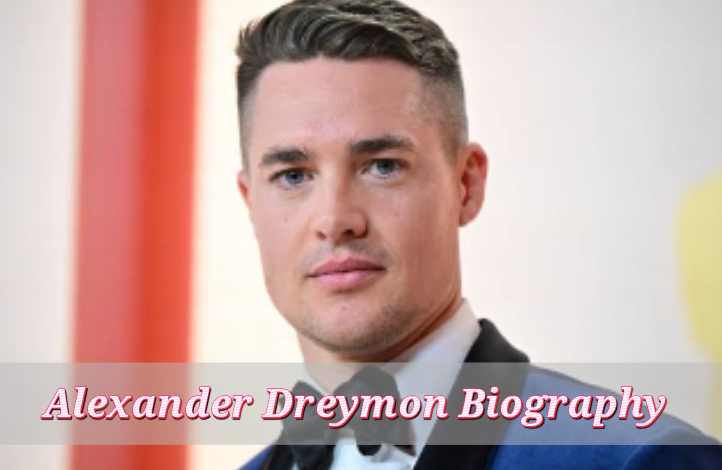
Alexander Dreymon Biography
Alexander Dreymon is a German actor who has won hearts around the world with his strong performances. He is best known for his role as Uhtred of Bebbanburg in the popular Netflix series The Last Kingdom. This show, which ran from 2015 to 2022, tells the story of England’s early history during Viking invasions. Dreymon’s portrayal of Uhtred, a warrior torn between his Saxon roots and Danish upbringing, shows his skill in bringing complex characters to life. Born on February 7, 1983, his real name is Alexander Doetsch. He changed his last name for his acting career. At 42 years old in 2025, Dreymon has built a solid place in entertainment. His journey from a child moving between countries to a Hollywood star inspires many. This article explores his life to help you understand who he is beyond the screen. We will look at his early years, education, career steps, personal relationships, financial success, and more. By reading this, you will learn how hard work and diverse experiences can lead to achievement in acting.
Alexander Dreymon Early Life and Background
Alexander Dreymon was born in Munich, Germany, on February 7, 1983. At that time, Germany was divided, and Munich was in West Germany. His family moved often because of his parents’ jobs. His father worked as a history teacher, and his mother was a doctor. This meant young Alexander lived in different places, including the United States, France, and Switzerland. For a while, he stayed in South Dakota in the US, where he learned to ride horses. These moves exposed him to various cultures from a young age.
Growing up in multiple countries helped Dreymon become adaptable. He learned three languages: German at home, French in France, and English in the US. This skill later helped in his acting, where accents and dialects matter. His father’s job as a history teacher likely sparked interest in historical stories, which fits his famous role in The Last Kingdom. Dreymon has shared that he always wanted to act, even as a child. He also practiced martial arts, building physical strength useful for action roles.
This background taught him about different ways of life. Living in Europe and America showed him varied customs and foods. For instance, in Switzerland, he experienced mountain life, while in the US, he saw open plains. Such experiences made him open minded. They also prepared him for the entertainment world, where travel is common. Dreymon’s early life shows how moving around can build character. It helped him understand people from all walks of life, a key skill for actors who must portray diverse roles.
His family supported his dreams. Though details about siblings are private, his parents encouraged education and exploration. This foundation set the stage for his future success. By learning from real world experiences, Dreymon gained a unique view that enriches his performances.
Alexander Dreymon Education
After high school, Alexander Dreymon focused on acting. He first studied in Paris, France, taking classes to build basic skills. Then, he trained for three years at Drama Centre London, a top acting school in England. This school teaches method acting, where students dive deep into characters’ emotions.
At Drama Centre, Dreymon learned stage techniques. He performed in plays in London and Paris. This hands on practice built his confidence. He also attended workshops to improve specific skills, like voice and movement. These extra sessions helped him stand out.
Education was key for Dreymon. It gave him tools to handle tough roles. For example, learning history through his training linked back to his father’s influence. He graduated with a BA from Drama Centre London. After school, he faced challenges finding work, but persisted.
Alexander Dreymon Career
Alexander Dreymon’s acting career started small but grew steadily. He made his screen debut in 2010 with a French TV movie called Ni reprise, ni échangée. In 2011, he played Caspar in Christopher and His Kind, alongside Matt Smith. That same year, he appeared as Steiner in the WWII drama Resistance.
In 2013 to 2014, he portrayed Luke Ramsey in five episodes of American Horror Story: Coven. This role in a popular horror series gained him notice.
His big break came in 2015 with The Last Kingdom. He starred as Uhtred of Bebbanburg, the lead in this historical drama based on Bernard Cornwell’s books. The show aired until 2022. Dreymon also became an executive producer in later seasons. He trained in sword fighting and accents to make Uhtred authentic. This role made him famous worldwide.
In 2020, he played Jackson in the thriller Horizon Line. Here, he met his future wife.
In 2023, he returned as Uhtred in the film Seven Kings Must Die, a sequel to the series.
As of 2025, Dreymon has taken on new projects, including a bold role in an upcoming historical drama. He has worked on independent US films too.
Dreymon’s career shows growth from small parts to leading man. He directs and produces now, expanding his skills. His work in historical dramas educates viewers about past eras. For instance, The Last Kingdom teaches about 9th century England and Viking culture. Dreymon prepares deeply, like learning Brazilian jiu jitsu for fitness. This commitment adds realism. Compared to shows like Vikings, his series stands out for accurate details. Fans appreciate his fan interactions on social media. His journey encourages new actors to train hard and take risks.
Alexander Dreymon Personal Life
Alexander Dreymon keeps his personal life private but shares some details. He met actress Allison Williams on the set of Horizon Line in 2019. Williams is known for roles in Girls and M3GAN. They welcomed their son, Arlo, in winter 2021 to 2022. Arlo is about 3 years old in 2025.
The couple married quietly in 2023. News of the wedding came out in June 2025. They live in Connecticut, US. Dreymon values family time, especially as a new father. He has spoken about how parenthood changed him.
He enjoys music, like the band Scorpions, which his mother introduced him to as a child. Dreymon practices Brazilian jiu jitsu, started during The Last Kingdom. This keeps him fit.
Balancing fame and family is important to him. He avoids sharing too much online to protect privacy. Dreymon and Williams support each other’s careers. For example, he attended events with her in 2024 and 2025. His personal life shows a grounded side, focusing on relationships over spotlight.
Alexander Dreymon Net Worth and Achievements
Alexander Dreymon’s net worth is estimated at $4 million to $5 million in 2025. Some sources suggest up to $10 million, but $4 million is common. He earns from acting, producing, and endorsements. His salary for The Last Kingdom was over $200,000 per year at one point.
Achievements include starring in The Last Kingdom, which has a large fan base. The show won praise for its storytelling. Dreymon received nominations for his role. He produced Seven Kings Must Die in 2023. His Instagram has over 1 million followers, showing popularity.
He speaks at events and inspires with his story. Dreymon’s work in diverse roles highlights his versatility. Future projects may increase his worth. His success comes from talent and effort.
Conclusion
Alexander Dreymon’s life from a global childhood to acting fame is inspiring. He shows how diverse experiences build strong careers. Through roles like Uhtred, he educates on history while entertaining. At 42 in 2025, he balances work and family well. Look for his new projects to see more growth. His story encourages chasing dreams with dedication.
FAQs
What nationality is Alexander Dreymon?
He is German, born in Munich.
How old is Alexander Dreymon?
He is 42 years old as of 2025, born February 7, 1983.
Is Alexander Dreymon married?
Yes, he married Allison Williams in 2023.
Does Alexander Dreymon have children?
Yes, he has a son named Arlo, born in 2021 to 2022.
What movies and TV shows has Alexander Dreymon been in?
See the career list above, including The Last Kingdom and American Horror Story.
What is Alexander Dreymon’s net worth?
Estimated $4 million to $5 million in 2025.