Mohammed Hussein Al Amoudi Biography, Net worth, Early Life, Age 2025, career

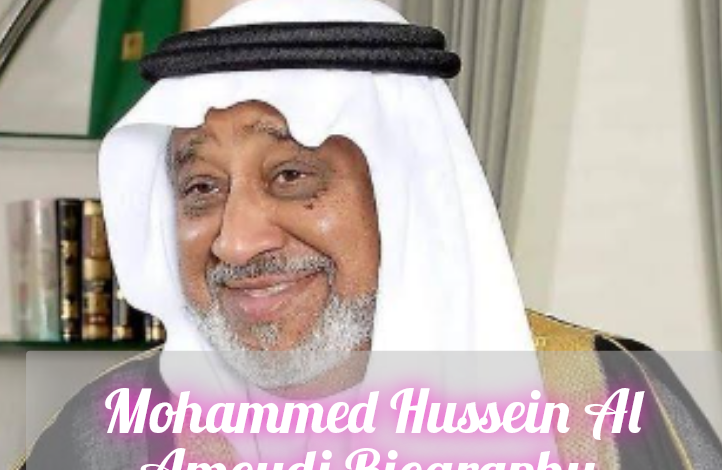
Mohammed Hussein Al Amoudi Biography
Mohammed Hussein Al Amoudi is a well-known businessman from Ethiopia who became a billionaire through hard work in many industries. He was born in Ethiopia but moved to Saudi Arabia early in life, where he built his success. Today, he is seen as one of the richest people in Africa and a key investor in places like Ethiopia, Saudi Arabia, and Sweden. His story shows how someone from simple beginnings can grow a global business empire. Al Amoudi owns companies in oil, mining, farming, and building. He also gives back through charity work, helping with health, education, and sports in different countries. This article looks at his life to help readers learn about his path, achievements, and impact. It uses facts from trusted sources to keep things clear and true.
Al Amoudi’s life mixes cultures from Ethiopia and Saudi Arabia. He started with small steps in construction and grew to control big firms like MIDROC and Corral Petroleum Holdings. His investments create jobs for over 70,000 people around the world. In Ethiopia, he is the biggest foreign investor, putting money into projects that help the economy grow. He faced tough times, like being held in Saudi Arabia from 2017 to 2019, but his businesses kept going strong. As of 2025, his wealth is estimated between 8 and 10.3 billion US dollars, making him a top figure in business. This biography aims to explain his journey in simple terms, so anyone can understand how he rose to the top.
Mohammed Hussein Al Amoudi Early Life
Mohammed Hussein Al Amoudi came into the world on July 21, 1946, in Dessie, a city in Wollo Province, Ethiopia. His father was from Yemen, part of the Hadhramaut region, and worked as a local trader dealing in spices and coffee. His mother was Ethiopian, from the same Wollo area. This mix of backgrounds gave Al Amoudi a unique view of the world from a young age. He grew up in a nearby town called Weldiya, where life was modest. Ethiopia at that time was under the rule of Emperor Haile Selassie, and the country faced changes in economy and society.
As a child, Al Amoudi lived in a family that valued hard work and trade. His father’s business likely taught him early lessons about buying and selling. The family had ties to both Ethiopian and Arab cultures, which helped shape his future. In the mid-1960s, when he was about 19 years old, Al Amoudi moved to Saudi Arabia with his brother. They went there to join relatives and seek better chances. Saudi Arabia was growing fast due to oil money, and this move changed his life. He became a Saudi citizen, which opened doors for business. His early years in Ethiopia built a strong connection to the country, and he later returned as an investor. This background of moving between places made him an international thinker, ready to build links across borders.
Mohammed Hussein Al Amoudi Education
Details about Al Amoudi’s formal education are not widely shared in public records. Sources like Wikipedia and business profiles do not list specific schools or degrees he earned. It seems he learned much through real-life experience rather than long classroom studies. Growing up in Ethiopia, he likely went to local schools in Weldiya or Dessie during his childhood. After moving to Saudi Arabia in the 1960s, he focused on work instead of higher education.
Many successful business people like him gain knowledge from hands-on jobs and self-study. Al Amoudi started in construction and trade, where he picked up skills in managing projects and deals. His success shows that practical learning can lead to big achievements. He later supported education through charity, funding schools and research centers. For example, he gave money to universities in Saudi Arabia for science programs. This suggests he values learning, even if his own path was more about action than books. Without clear facts on his schooling, we can say his “education” came from the school of life, building skills through early career steps.
Mohammed Hussein Al Amoudi Career
Al Amoudi’s career began in Saudi Arabia after he moved there in the mid-1960s. He started small in construction and real estate during the country’s oil boom. This time was perfect for growth, as Saudi Arabia needed new buildings and infrastructure. He founded his first company in the 1970s, focusing on building projects. By the 1980s, he won big contracts, like one in 1988 for a 30 billion US dollar underground oil storage system across Saudi Arabia. This deal put him on the map as a trusted builder.
In the 1990s, he expanded his work. He created MIDROC, which stands for Mohammed International Development Research and Organization Companies. This group became his main tool for business. MIDROC grew into areas like mining, farming, and energy. In Ethiopia, he started MIDROC Ethiopia in 1994, investing in gold mines and factories. For example, he bought the Lega Dembi gold mine, which produces about 4,500 kilograms of gold each year. This made him Ethiopia’s top gold exporter and a big payer of taxes to the government.
Al Amoudi also entered the oil world. In 1994, he bought OK Petroleum in Sweden, later renaming it Preem Petroleum. Preem became Sweden’s largest fuel company, refining oil and selling gas. He added refineries in Morocco too. Through Corral Petroleum Holdings, he managed these energy assets. In 2000, he acquired Yanbu Steel in Saudi Arabia, adding metal production to his list.
His work in farming is huge in Ethiopia. He owns Saudi Star Agricultural Development, which farms thousands of hectares for rice, fruits, and coffee. In 2011, he invested 2.5 billion US dollars in rice projects, leasing land to grow food. He also built Ethiopia’s first big steel plant, Tossa, to meet rising demand for materials. In cement, his Derba Midroc plant supplies building needs with help from world banks.
Al Amoudi invested in hotels and health too. He owns the Sheraton Addis Ababa, one of Africa’s top hotels. His companies make medicine and run clinics. In 2010, he pledged 275 million US dollars for Saudi Arabia’s first car, the Gazal-1. By 2011, he put over 1 billion US dollars into phosphate and sulfur projects in Saudi cities.
His empire spans Europe, Africa, and the Middle East. In Sweden, he has energy firms in Stockholm. In West Africa, he explores for oil. MIDROC employs over 70,000 people, creating jobs and skills. In Ethiopia, his investments boost the economy by billions. As of 2025, he plans new mega projects to add more workers. His career shows smart choices, like buying assets during good times and growing them steadily.
Mohammed Hussein Al Amoudi Chanellage and Controversies
Al Amoudi has faced some hard times in his long career. One big event was his arrest in Saudi Arabia on November 4, 2017. This happened during a government crackdown on corruption led by Crown Prince Mohammed bin Salman. Al Amoudi was held with princes, ministers, and others at a luxury hotel turned into a detention center. He stayed there for over 14 months until his release on January 27, 2019. No public charges were made against him, and he returned to business after.
During this time, his companies kept running well. His net worth even grew to about 8.3 billion US dollars by late 2018, as oil and gold prices helped. But the arrest raised questions about his ties to Saudi leaders. Some reports said it might link to business deals or politics, but no proof came out.
Another issue was a libel case in 2010. Al Amoudi sued Elias Kifle, who ran the Ethiopian Review website, in a UK court. The site posted false claims about his family and old terror funding rumors from 2005. Those 2005 claims came from a French report, but the author apologized later. The judge ruled the stories untrue and awarded Al Amoudi 175,000 British pounds in damages on July 2011. Al Amoudi said he opposes all terrorism.
In Ethiopia, some mining work caused local protests. In the Oromia region, people complained about land use and jobs. This led to arrests and unrest, but details are limited. Al Amoudi addressed concerns by focusing on community help, like building roads and clinics. Overall, these events show business risks in big deals and politics, but he bounced back each time.
Mohammed Hussein Al Amoudi Personal Life
Al Amoudi keeps his personal life private, but some facts are known. He is married to Sofia Saleh Al Amoudi, a Saudi citizen who owns shares in MIDROC Construction. They have eight children together. His family mixes Ethiopian and Saudi roots, like his own background.
He splits his time between homes in central London, Surrey in the UK, and Jeddah in Saudi Arabia. In July 2024, he returned to Ethiopia after leaving in 2017, arriving in a Rolls-Royce Spectre car. This shows his ongoing link to his birth country.
Al Amoudi enjoys sports and supports teams. He sponsors Saint George SC, an Ethiopian football club, and paid for player medical costs. He also funds stadiums, like the one in Mek’ele named after him, opened in January 2017. His life focuses on business and giving back, with little public talk about hobbies. He is seen as a family man who values culture and community.
Mohammed Hussein Al Amoudi Net Worth
As of December 18, 2025, Al Amoudi’s net worth is around 8.24 billion US dollars, according to the Bloomberg Billionaires Index. This is down by 617 million US dollars from the start of the year, due to changes in oil and gold prices. Other sources like Wikipedia estimate it at 10.3 billion US dollars, but Bloomberg gives the latest figure. Forbes listed him at 8.1 billion US dollars in 2017, showing growth over time.
His wealth comes from many sources. Oil and energy make up a big part, through Preem in Sweden and refineries in Morocco. Mining, especially gold in Ethiopia, adds more. Farming investments in rice and coffee bring steady income. Construction and real estate from early days in Saudi Arabia form the base. He ranks as Ethiopia’s richest person and the second richest Saudi citizen. On global lists, he is about 437th on Bloomberg.
His net worth changes with markets. Asset sales, like some Swedish holdings, affect it. Despite the 2017 arrest, his fortune rose during that time. He uses wealth for charity, like pledging 1.5 billion Ethiopian birr (about 88 million US dollars) in 2011 for the Grand Ethiopian Renaissance Dam. This shows he invests back into growth.
Conclusion
Mohammed Hussein Al Amoudi’s life is a story of rising from simple roots to global success. Born in Ethiopia in 1946, he moved to Saudi Arabia and built an empire in oil, mining, and farming. His companies like MIDROC create jobs and help economies in Africa, Europe, and the Middle East. He faced challenges, like the 2017 arrest, but came back stronger. His charity work in health, education, and sports shows a commitment to others. With a net worth of over 8 billion US dollars in 2025, he remains a key figure. His legacy is as a bridge between cultures, driving progress through business and giving. Readers can learn from his focus on hard work and smart choices.
FAQs
What is Mohammed Hussein Al Amoudi’s net worth in 2025?
His net worth is estimated at 8.24 billion US dollars by Bloomberg, with some sources saying up to 10.3 billion US dollars.
Where was Mohammed Hussein Al Amoudi born?
He was born in Dessie, Wollo Province, Ethiopia, on July 21, 1946.
What companies does Mohammed Al Amoudi own?
He owns MIDROC Group, Corral Petroleum Holdings, Preem Petroleum in Sweden, and MIDROC Ethiopia, covering oil, mining, farming, and construction.
Why was Mohammed Al Amoudi arrested in Saudi Arabia?
He was detained on November 4, 2017, during a corruption crackdown, but released on January 27, 2019, with no charges filed.
How has Al Amoudi helped Ethiopia?
He invests billions in mining, farming, and infrastructure, creating jobs and donating to projects like the Grand Ethiopian Renaissance Dam and stadiums.
What is Al Amoudi’s family like?
He is married to Sofia Saleh Al Amoudi and has eight children. He lives in London, Surrey, and Jeddah.
What are Al Amoudi’s main business areas?
His focus is on energy, mining, agriculture, construction, and hotels in Ethiopia, Saudi Arabia, and Sweden.