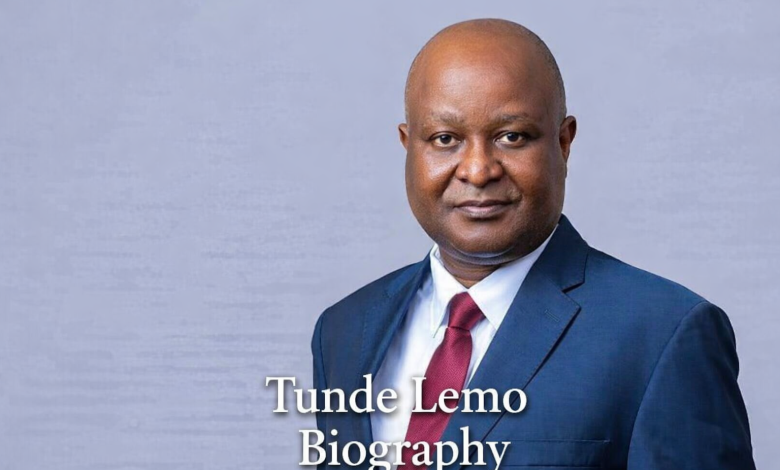
Who is Tunde Lemo?
Tunde Lemo is a prominent Nigerian banker and financial expert. He was born in 1959. He is a native of Ogun State in southwestern Nigeria. He is widely known for his leadership in Nigeria’s banking sector. He served as Deputy Governor of the Central Bank of Nigeria. He has also held key positions in major financial institutions. His career reflects discipline, expertise, and strong corporate governance.
He began his professional journey at Arthur Andersen & Co in 1985. He later became Managing Director of Wema Bank Plc from 2000 to 2003. In 2003, he was appointed Deputy Governor of Operations at the Central Bank of Nigeria. He also served as Deputy Governor of the Financial Surveillance sector. His role placed him at the center of banking supervision and financial reforms.
He later became Chairman of the Abuja Securities & Commodity Exchange Plc. He served as a Non-Executive Director of the Africa Finance Corporation. President Muhammadu Buhari approved his appointment as Chairman of the Federal Emergency Road Maintenance Agency in 2017. He is currently Chairman of Titan Trust Bank and Flutterwave. His leadership experience spans banking, finance, infrastructure, and corporate governance in Nigeria.
Tunde Lemo Early Life and Background
Tunde Lemo was born in 1959 in Nigeria. He is a native of Ogun State in the southwestern region of the country. He grew up in a disciplined and education-focused environment. His early years were shaped by strong moral values and academic guidance. His mother, Eunice Olufolake Lemo, was a school teacher. She was born on 11 November 1932 and passed away on 9 May 2018. Her profession influenced his passion for learning and excellence.
His upbringing instilled in him responsibility and hard work. These early experiences laid the foundation for his future achievements in accounting, banking, and national financial leadership.
Tunde Lemo Education and Academic Achievements
Tunde Lemo began his educational journey in Nigeria. He attended a public primary school where he built a strong academic foundation. He later moved to a missionary-founded secondary school. His early education was guided by discipline and moral values. He showed excellence in his studies from a young age. His performance reflected focus and determination.
He gained admission into the University of Nigeria, Nsukka. He studied Accountancy and graduated in 1984 with First Class Honours. He was the best overall graduating student in the Faculty of Business Administration. He won seven academic laurels during his graduation year. His outstanding performance marked him as a brilliant scholar.
In 1997, he became a Fellow of the Institute of Chartered Accountants of Nigeria. He is also a Fellow of the Chartered Institute of Bankers. His academic and professional qualifications prepared him for leadership roles in Nigeria’s banking and financial sector.
Tunde Lemo Distinguished Career and Leadership Roles
Tunde Lemo began his professional career in 1985 at Arthur Andersen & Co. He worked in auditing and financial consulting. He gained strong technical experience in accounting and corporate governance. His early career helped him understand financial systems and regulatory frameworks. He built a reputation for discipline and analytical strength. His experience at Arthur Andersen shaped his future leadership path in banking.
From 2000 to 2003, he served as the Managing Director of Wema Bank Plc. During his tenure, he focused on operational efficiency and financial stability. He strengthened internal controls and improved banking processes. His leadership enhanced the bank’s performance and credibility. His time at Wema Bank positioned him for national recognition in the financial sector.
In 2003, he was appointed Deputy Governor of Operations and Director of the Central Bank of Nigeria. He also served as Deputy Governor of the Financial Surveillance sector. His role involved supervising banking operations and ensuring financial stability. He contributed to reforms aimed at strengthening Nigeria’s banking system. His tenure placed him at the center of regulatory oversight and policy implementation.
On 2 January 2004, he became Director and Chairman of the Abuja Securities & Commodity Exchange Plc. This appointment expanded his influence into capital markets. On 16 May 2007, he became a Non-Executive Director of the Africa Finance Corporation. His board-level experience deepened his role in corporate governance and development finance.
On 6 October 2017, President Muhammadu Buhari approved his appointment as Chairman of the Federal Emergency Road Maintenance Agency. He effectively assumed office in July 2018. He later became Chairman of Titan Trust Bank and Flutterwave. On 23 December 2021, Titan Trust Bank acquired 89.39 percent stake in Union Bank of Nigeria. His career reflects leadership, reform, and strategic influence in Nigeria’s financial and corporate sectors.
Tunde Lemo Personal Life and Family
Tunde Lemo maintains a disciplined and private personal life. He is married to Mrs. Yemi Lemo. She is an educationist and a respected professional in the academic sector. She serves as the Executive Director and Vice-Chairman of the Lead-Forte Gate School Board of Governors. She holds a Bachelor’s degree in Education. Her career reflects commitment to learning and youth development.
Tunde Lemo comes from a family rooted in strong values. His mother, Eunice Olufolake Lemo, was a school teacher. Her influence shaped his love for education and excellence. He values discipline, integrity, and responsibility in his home life. Despite his public profile, he keeps details about his children and extended family private. His personal life reflects stability, professionalism, and strong family principles.
Tunde Lemo Legacy
Tunde Lemo’s legacy is deeply rooted in Nigeria’s banking and financial reforms. He is widely respected for his role as Deputy Governor of the Central Bank of Nigeria. During his tenure, he contributed to strengthening banking supervision and financial surveillance. He helped shape policies that improved regulatory oversight. His work supported financial stability during critical periods in Nigeria’s economy. His influence extended beyond routine administration into long-term institutional reform.
As Managing Director of Wema Bank, he demonstrated strategic leadership and operational discipline. His time in the private banking sector strengthened corporate governance standards. His later leadership at Titan Trust Bank marked a new chapter in Nigeria’s banking landscape. The acquisition of an 89.39 percent stake in Union Bank of Nigeria in 2021 positioned him at the center of one of the most significant banking transactions in recent years.
His impact also extends into infrastructure and capital markets. As Chairman of the Federal Emergency Road Maintenance Agency, he contributed to national infrastructure oversight. His board roles at the Africa Finance Corporation and Flutterwave reflect his influence across finance and technology sectors.
Tunde Lemo’s legacy reflects excellence, reform, and strategic leadership. He is regarded as a financial expert who combined technical knowledge with policy direction. His career has influenced banking regulation, corporate governance, and financial innovation in Nigeria.
Conclusion
Tunde Lemo stands as one of Nigeria’s most respected banking and financial leaders. Born in 1959 and a native of Ogun State, he built his life on discipline and academic excellence. From graduating with First Class Honours at the University of Nigeria, Nsukka, to becoming a Fellow of both ICAN and the Chartered Institute of Bankers, his foundation was built on knowledge and professionalism.
His career spans Arthur Andersen, Wema Bank, and the Central Bank of Nigeria, where he served as Deputy Governor. He later held strategic leadership roles including Chairman of FERMA, Titan Trust Bank, and Flutterwave. The acquisition of a majority stake in Union Bank under his leadership marked a defining moment in Nigeria’s banking industry.
Beyond titles and achievements, his legacy reflects integrity, reform, and strategic impact. His journey continues to influence Nigeria’s financial sector and corporate governance landscape.
Frequently Asked Questions (FAQ) About Tunde Lemo
1. Who is Tunde Lemo?
Tunde Lemo is a Nigerian banker and financial expert. He is a former Deputy Governor of the Central Bank of Nigeria.
2. When was Tunde Lemo born?
He was born in 1959.
3. Which state is Tunde Lemo from?
He is a native of Ogun State in southwestern Nigeria.
4. What did Tunde Lemo study?
He studied Accountancy at the University of Nigeria, Nsukka. He graduated with First Class Honours in 1984.
5. What professional qualifications does he hold?
He is a Fellow of the Institute of Chartered Accountants of Nigeria. He is also a Fellow of the Chartered Institute of Bankers.
6. Where did Tunde Lemo start his career?
He began his professional career at Arthur Andersen & Co in 1985.
7. Did Tunde Lemo serve as Managing Director of a bank?
Yes. He served as Managing Director of Wema Bank Plc from 2000 to 2003.
8. What role did he play at the Central Bank of Nigeria?
He served as Deputy Governor of Operations and Deputy Governor of the Financial Surveillance sector.
9. Is Tunde Lemo married?
Yes. He is married to Mrs. Yemi Lemo, an educationist and Vice-Chairman of the Lead-Forte Gate School Board of Governors.
10. What is Tunde Lemo’s net worth?
As of 2026, there is no verified public figure for his exact net worth.
11. What is he currently known for?
He is known as the Chairman of Titan Trust Bank and Flutterwave. He also led Titan Trust Bank in acquiring 89.39 percent stake in Union Bank of Nigeria in 2021.
Read more: