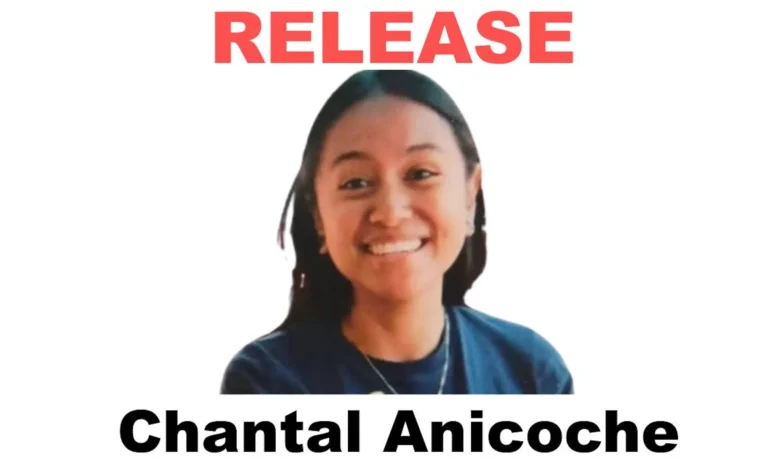
On January 1, 2026, Chantal Anicoche a 25-year-old Filipino-American community leader and human rights advocate became the focus of international attention when she went missing amid a military encounter in Occidental Mindoro, Philippines. That morning, government forces of the Armed Forces of the Philippines and insurgents from the New People’s Army engaged in a series of clashes and aerial operations in Abra de Ilog, involving helicopters, bombing, and strafing in mountainous terrain where Chantal had been working with rural and Indigenous communities.
Initially reported missing after losing contact in the midst of the hostilities, her disappearance sparked urgent calls from human rights organizations and Filipino-American groups for her safety and accountability in conflict-affected areas. Nearly a week later, on January 8, 2026, Philippine Army personnel located her alive in a hole near the encounter site, bringing an abrupt and controversial turn to a story that had raised deep concerns about civilian protection, activist safety, and the dynamics of armed conflict in Mindoro.
Chantal Anicoche Education & Early Life
Chantal Anicoche’s academic journey laid a strong foundation for her later work in community leadership and advocacy. She earned a Bachelor of Science in Psychology from the University of Maryland, Baltimore County (UMBC), graduating with the Class of 2023. At UMBC, she not only pursued rigorous academic training in understanding human behavior, trauma, and resilience but also immersed herself in the university’s vibrant cultural and student engagement landscape.
During her time at UMBC, Chantal took on active roles in student leadership, most notably as a leader within the Filipino American Student Association (FASA). In this capacity, she helped organize cultural events, facilitated discussions, and built community programs designed to strengthen Filipino identity and solidarity among students on campus. Her involvement in FASA was more than extracurricular; it became a formative experience that shaped her commitment to empowering others and deepening connections within and beyond the Filipino-American community.
Chantal Anicoche Advocacy & Work
Chantal Anicoche’s advocacy is defined by a commitment to community empowerment, cultural identity, and human rights. Her work spans multiple sectors, with a central focus on youth leadership, where she has helped develop programs that encourage young people particularly those from diaspora and marginalized backgrounds to engage in community organizing, cultural education, and civic participation. Through these efforts, she has cultivated environments that promote confidence, social awareness, and cross-community solidarity.
Her activism extends into environmental and Indigenous rights, reflecting a belief in the interconnectedness of ecological sustainability, ancestral land sovereignty, and the well-being of marginalized communities. In this space, Chantal has collaborated with networks supporting Indigenous and rural groups, amplifying campaigns related to land defense, environmental protection, and community autonomy. Her work with rural and farming communities further highlights her grounding in concrete, people-centered initiatives focused on food security, livelihood support, and equitable resource access.
Education remains a core dimension of her advocacy. Chantal has held roles in community education, outreach, and training, often integrating trauma-informed approaches to support individuals in underserved or crisis-affected environments. Through both volunteer placements and partnership work, she has contributed to human rights education and public awareness efforts, reinforcing the importance of rights literacy and social responsibility across generations.
Taken together, Chantal’s advocacy and professional engagements reveal a trajectory rooted in collective empowerment, transnational solidarity, and the belief that durable social change emerges from organized communities informed by their histories, identities, and shared aspirations.
Situation in the Philippines on January 2026
In early January 2026, Chantal Anicoche traveled to Abra de Ilog, Occidental Mindoro in the Philippines as part of her ongoing community-based work with rural and Indigenous groups, including the Mangyan people. Her aim in the region was to engage directly with local communities, conduct research, and help facilitate relief and solidarity efforts.
On January 1, 2026, amid a significant armed encounter and military operation between the Philippine Army and the New People’s Army, which included aerial bombings and strafing in mountainous areas of Mindoro, contact with Chantal was lost. Initial reports from civil society and human rights groups described her as missing following the operation and urged authorities to locate her and ensure her safety.
After nearly a week of uncertainty and growing international concern, multiple Philippine news outlets reported that Chantal was found alive on January 8, 2026. According to statements from the Armed Forces of the Philippines, soldiers located her in a hole near the encounter site in Sitio Mamara, Barangay Cabacao, where she had reportedly taken shelter during the hostilities. The Philippine Army brought her down from the mountainous terrain and assessed her health; official military sources described her as “safe” and undergoing medical and psychosocial evaluation.
Despite being located, Chantal’s situation remains complex. She has since been in the custody of the Philippine military, with authorities describing her as a “person of interest” and conducting debriefing and processing. Some human rights groups and Filipino-American organizations have questioned the official account of her rescue, raised concerns about her ongoing detention, and called for her immediate release and protection of her rights, asserting that she should not be subjected to interrogation, intimidation, or legal action without due cause.
Her case has drawn wide attention from rights advocates, who emphasize the broader humanitarian and legal concerns around civilian safety in conflict zones and the need to protect activists working alongside vulnerable communities.
Chantal Anicoche Net Worth
Chantal Anicoche’s financial status reflects her early-career stage and the nature of her work in community advocacy rather than commercial or entertainment industries. Her estimated net worth is modest, calculated at over $20,000, a figure consistent with individuals whose professional focus centers on grassroots organizing, educational initiatives, and humanitarian engagement rather than income-driven pursuits.
Conclusion
Chantal Anicoche represents a new generation of Filipino-American leaders whose work bridges identity, activism, and community empowerment across borders. Grounded in academic training, cross-cultural organizing, and a commitment to social justice, her trajectory reflects a dedication to uplifting marginalized communities and amplifying issues often overlooked in mainstream discourse. The events surrounding her 2026 involvement in Occidental Mindoro have brought heightened visibility to her advocacy, while also raising broader questions about civilian protection, human rights, and the role of diaspora youth in international solidarity efforts. As public attention continues to focus on her circumstances, Chantal’s story stands as a testament to the impact of principled engagement and the complexities faced by advocates working within conflict-affected environments.
Frequently Asked Questions About Chantal Anicoche
1. Who is Chantal Anicoche?
Chantal Anicoche is a Filipino-American community leader and human rights advocate known for her work in youth empowerment, cultural identity, and grassroots organizing. She has been active in movements supporting rural and Indigenous communities in the Philippines.
2. What happened on January 1, 2026?
On January 1, 2026, Chantal went missing during a military encounter between the Philippine Army and the New People’s Army in Abra de Ilog, Occidental Mindoro. She was later found alive by the Philippine Army on January 8, 2026.
3. Why was Chantal in Occidental Mindoro?
Chantal was in Occidental Mindoro for community-based work involving rural and Indigenous communities, including research, outreach, and solidarity efforts.
4. Was Chantal found safe?
Chantal was found alive and physically safe after nearly a week with no contact. Following her discovery, she was placed under military custody for processing, leading to concerns and statements from human rights groups.
5. What is Chantal Anicoche’s educational background?
She earned a Bachelor of Science in Psychology from the University of Maryland, Baltimore County (UMBC) and was active in student leadership through the Filipino American Student Association (FASA).
6. What advocacy work is she known for?
Chantal is associated with advocacy in youth leadership, Indigenous and environmental rights, human rights education, and support for farming and rural communities.
7. What is Chantal Anicoche’s net worth?
Her estimated net worth is modest, calculated at over $20,000, reflecting her early advocacy-centered career rather than commercial pursuits.
8. Does Chantal have public social media or contact information?
Chantal maintains a low public profile and does not share personal contact details publicly. During the events of early 2026, information was communicated through community and advocacy networks.
9. Why did her case attract international attention?
Her disappearance during armed conflict raised concerns about civilian safety, activist protection, and the treatment of diaspora advocates engaged in humanitarian work in the Philippines.