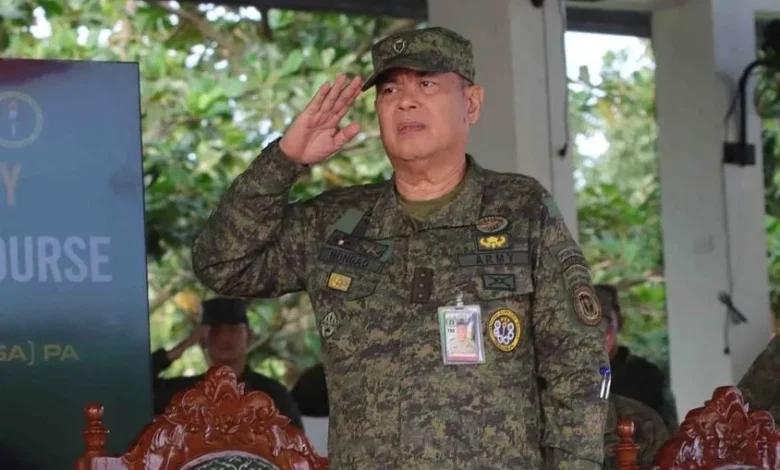
Colonel Audie A. Mongao is a senior officer of the Philippine Army who has served his nation with distinction over more than three decades. Until January 2026, he commanded the Army’s Training Support Group under the Training and Doctrine Command (TRADOC). In that role, he was responsible for shaping the training doctrine and professional preparation of Army personnel, a task central to the preparedness and modernization of the Philippine Army.
In January 2026, Mongao became the subject of national attention following the circulation his online postvin which he allegedly withdrew his personal support for President Ferdinand “Bongbong” Marcos Jr. The message sparked immediate institutional reaction, leading to his relief from command and a formal investigation by the Army Training Command. The episode ignited public debate over military professionalism, constitutional loyalty, and the role of personal views in the ranks of the Armed Forces of the Philippines.
Colonel Audie A. Mongao Early Life and Family Roots
Audie A. Mongao was born in the Philippines in the early 1960s and grew up in an environment that emphasized service, discipline, and a deep respect for national values. While Mongao’s precise date and place of birth are not widely documented, his early life reflects the archetype of a Filipino youth raised with a strong sense of duty to family and country. The cultural milieu of Manila and surrounding provinces during his upbringing reinforced ideals of patriotism and commitment to public service. Detailed family backgrounds, including the names of his parents or siblings, are not publicly disclosed, as Mongao has generally kept his private life shielded from media attention.
In interviews throughout his career, Mongao has attributed his foundational values to the influence of elders who instilled in him a rigorous work ethic and a belief in collective responsibility. This early shaping of core values would later inform his decision-making as a military leader, particularly in high-stakes environments where ethical considerations and professional duties intersected. His formative years laid the groundwork for a lifetime devoted to institutional loyalty and national service.
Colonel Audie A. Mongao Education and Formation
Colonel Mongao’s formal military education began with his acceptance into the Philippine Military Academy (PMA), the premier institution for officer formation in the Philippines. He graduated from PMA in the early 1990s and was commissioned into the Philippine Army upon completion of his studies. This foundational education equipped him with tactical skills, leadership training, and the discipline necessary for a career in infantry and command.
Beyond the PMA, Mongao completed advanced military professional courses aimed at preparing officers for senior leadership. Evidence from military delegation records shows that he served in senior roles at the Army Training Command and participated in high-level seminars and leadership programs, highlighting his commitment to continuous professional development. His academic formation includes coursework in strategic leadership, operational planning, and doctrinal development, which would later underpin his approach as a training commander.
Colonel Audie A. Mongao Rise Through the Military Ranks
Mongao’s early assignments in the Army included tactical and operational roles that tested his mettle in field command. He rose steadily through the infantry branch, serving in various capacities that blended frontline responsibilities with staff and command duties. In the mid-2010s, he was appointed Commander of the 15th Infantry Battalion, a key field unit responsible for counter-insurgency and security operations in Lanao del Norte. His time in this battalion highlighted his leadership in complex operational environments marked by internal security challenges.
In subsequent years, Mongao expanded his portfolio to include public affairs and communication roles, notably serving in capacities where he articulated Army positions to both internal stakeholders and the broader public. These experiences honed his ability to navigate the intersection of military operations and public perception. He also contributed to doctrinal discussions and helped shape training initiatives that bridged tactical expertise with institutional priorities focused on modern threats and civil-military cooperation.
Colonel Audie A. Mongao The Trainer and Mentor
The latter stage of Mongao’s career was defined by his roles in institutional training and professionalization. As a senior commander within the Training and Doctrine Command (TRADOC), he oversaw units tasked with developing and implementing training programs that spanned the Army’s spectrum of operational needs. His tenure as Commander of the Training Support Group placed him at the heart of efforts to standardize, update, and institutionalize training across the Army.
His leadership in training development was not merely administrative; it reflected a strategic perspective on how professional soldiers should be cultivated. Under his command, training modules increasingly emphasized adaptability, resilience, and joint operations skills—qualities essential in contemporary security environments. Colleagues and subordinates described Mongao as a mentor whose direct engagement with trainees reinforced a culture of accountability and excellence among junior officers and enlisted personnel alike.
Colonel Audie A. Mongao Faith, Ethics and Leadership Philosophy
Colonel Mongao’s professional life has been underscored by a steadfast ethical framework rooted in loyalty to the Constitution and the Filipino people rather than to any individual political figure. Throughout his career, he emphasized that military service must remain anchored in institutional principles rather than transient political affiliations. This philosophy often guided his teaching in leadership courses and doctrinal seminars, reflecting the conviction that disciplined soldiers must serve under the authority of the Constitution.
Beyond institutional loyalty, Mongao’s leadership philosophy was shaped by personal values emphasizing integrity, accountability, and moral courage. These values frequently surfaced in his mentorship of younger officers, where he advocated that professional conduct and adherence to ethical standards are non-negotiable attributes of military leadership. His belief in principled service became a defining feature of his public image, particularly as questions of loyalty and duty were thrust into the national spotlight in early 2026.
Colonel Audie A. Mongao Family Life
Despite his public profile, Colonel Mongao has maintained a protective boundary around his personal and family life. It is publicly acknowledged that he is married and a family man, but specific details such as the name of his wife, her background, and the identities of any children are not disclosed in reliable media sources. This discretion aligns with a long-standing pattern among Philippine military officers to separate personal life from professional duties.
Mongao’s choice to keep his family out of the spotlight reflects a deliberate effort to shield loved ones from the glare of public controversy and media scrutiny. His professional narrative consistently highlights institutional achievements and leadership contributions while avoiding personal exposure. As a result, any portrayal of his family life must rely on general acknowledgment of his role as a spouse and parent rather than specific biographical details.
Colonel Audie A. Mongao The 2026 Ccontroversy
In early January 2026, a statement circulated on social media attributed to Colonel Mongao proclaiming that he had withdrawn his personal support for President Ferdinand “Bongbong” Marcos Jr. The exact wording of the message suggested that Mongao was reaffirming his commitment to serve the Filipino people and uphold constitutional principles rather than aligning loyalty with any specific political leader. The Army’s swift response was to relieve him from his post as Commander of the Training Support Group and place him under administrative and legal investigation.
This action underscored the Philippine Army’s strict adherence to non-partisanship and its requirement that officers refrain from actions that could be perceived as political. Military leadership emphasized that due process would be observed, and that any determination regarding Mongao’s conduct would be based on established military law and evidence. The situation generated considerable public debate, with some civic groups expressing support for Mongao’s stance on constitutional loyalty, while others stressed the importance of military discipline and chain of command.
His Submission to Military Control and Ongoing Proceedings
Following days of heightened attention and negotiation, Mongao voluntarily submitted himself back to military control in January 2026. Army officials confirmed that he had returned to custody, fully cooperating with the ongoing investigation into the circumstances surrounding the social media message and his alleged withdrawal of support for the President. Army leadership reiterated the importance of loyalty to the Constitution and the chain of command as central pillars of the institution’s identity.
The formal proceedings remain ongoing, and Mongao’s return to military command underscores the Army’s commitment to due process. This episode represents a pivotal moment in his career, one in which institutional duty, individual conviction, and national discourse intersect. Regardless of the outcome, Mongao’s actions have ignited a broader conversation about the responsibilities of military officers in a democratic society and the boundaries of personal expression within a structured chain of command.
Conclusion
Colonel Audie A. Mongao’s career represents the trajectory of a professional soldier shaped by discipline, institutional loyalty, and decades of steady advancement through the Philippine Army. His work in training and doctrine positioned him at the core of the Army’s long-term professionalization efforts, where he influenced curriculum, standards, and the development of junior leaders. His leadership philosophy—centered on ethical service, constitutional duty, and principled conduct—has been a defining feature of his legacy within the service, even as the full implications of his public controversy continue to unfold.
The events of January 2026 not only thrust Mongao into the national spotlight, but also raised broader questions about the role and limits of military expression in a democratic society. His removal from command and subsequent voluntary return to military control underscore the complex intersection of personal conviction, institutional discipline, and national governance. Regardless of how the proceedings conclude, Colonel Mongao’s story stands as a case study in the enduring tensions between individual conscience and collective military duty. It secures his place in contemporary military discourse and ensures that his career will continue to be examined by scholars, analysts, and the public for years to come.
Frequently Asked Questions About Audie Mongao
1. Who is Colonel Audie A. Mongao?
Colonel Audie A. Mongao is a senior officer of the Philippine Army known for his roles in training doctrine, leadership development, and infantry operations. He served as Commander of the Training Support Group under the Army Training and Doctrine Command (TRADOC) until January 2026.
2. What is Colonel Mongao known for?
He is primarily recognized for his long military career, his contributions to Army training and institutional development, and his involvement in a January 2026 national controversy linked to an online post attributed to him. The post suggested a withdrawal of personal support for President Ferdinand Marcos Jr., resulting in his relief from command and a formal investigation.
3. Why was Colonel Mongao relieved from command?
He was relieved after a viral online statement attributed to him allegedly withdrawing personal support from the President. The Philippine Army took administrative action, citing organizational discipline and the non-partisan nature of the Armed Forces.
4. Did Colonel Mongao confirm the viral statement?
As of the latest official reporting, no public confirmation from Mongao himself has been documented. The Army launched an investigation to determine authorship, context, and potential violations of military regulations.
5. What happened after he was relieved?
After his relief, Colonel Mongao voluntarily submitted himself back to military control, cooperated with authorities, and remained subject to ongoing inquiry under military procedures and due process standards.
6. What is his educational background?
Mongao graduated from the Philippine Military Academy (PMA) and later pursued advanced professional military education, including senior leadership and national security courses appropriate for his rank.
7. What roles did he hold in the Army?
Over more than three decades, he held infantry, staff, public affairs, and training appointments. His most influential positions were in training and doctrine, where he helped standardize leadership and operational preparation across the Philippine Army.
8. Is Colonel Mongao married?
Yes. he is married; however, his wife’s identity and personal background are not disclosed. Information about his children is also private.
9. What is Colonel Mongao’s net worth?
There is no official public disclosure of his net worth.
10. What is his legacy in the military?
His legacy is tied to professional mentorship, institutional training reform, and the national conversation sparked by the 2026 controversy. Supporters view him as a principled officer who emphasizes constitutional duty, while critics point to the importance of strict military neutrality in political matters.
11. What is his current status?
Following his voluntary submission to military control, he remains subject to institutional processes. Any updates on the outcome of the investigation depend on official military or government disclosures.