FG Begins ₦25,000 CCT/RRRConditional Cash Transfer Payments to Beneficiaries

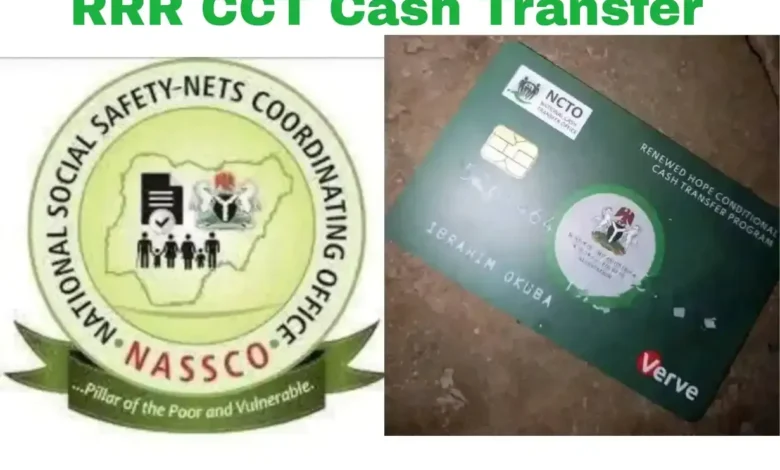
In a major stride toward cushioning the socioeconomic hardships facing millions of Nigerians, the Federal Government has commenced disbursements of the ₦25,000 monthly stipend under the Renewed Hope Conditional Cash Transfer (CCT) and Rapid Response Register (RRR) programme. This landmark initiative forms part of the government’s broader social safety net reforms intended to help poor and vulnerable households cope with inflationary pressures, economic reforms and rising cost of living across the country.
Background: Social Safety Nets in Nigeria
The idea of cash transfer as a government tool for poverty alleviation is not new in Nigeria. Over the years, various administrations—from the National Poverty Eradication Programme (NAPEP) to the National Social Investment Programme (NSIP)—have implemented direct benefit transfers and conditional cash transfer schemes aimed at lifting vulnerable populations out of extreme poverty. These programmes historically targeted household welfare improvements, often by providing recurring cash stipends linked to basic household needs.
The current scheme in focus—the Renewed Hope CCT and RRR programme—is implemented through the National Social Safety-Nets Coordinating Office (NASSCO) and the National Cash Transfer Office (NCTO), in collaboration with other agencies such as the Ministry of Humanitarian Affairs and the National Identity Management Commission (NIMC). Central to this initiative is the reliance on the National Social Register (NSR) and the Rapid Response Register (RRR), which capture data on poor and vulnerable households across Nigeria’s 36 states and the Federal Capital Territory.
What the ₦25,000 Payment Means
Each eligible household stands to receive ₦75,000 in total, divided into three monthly payments of ₦25,000 each. The first tranche began rolling out on December 19, 2025, with millions of households across the country already receiving alerts into their bank accounts confirming the first ₦25,000 stipend.
These payments are digital, meaning that beneficiaries no longer collect cash physically through local government or ward officials. Instead, funds are sent directly into beneficiaries’ registered bank accounts or mobile wallets, ensuring greater transparency, traceability and reducing the risks of leakages, corruption and logistical delays that have plagued cash distribution programmes in the past.
The programme’s design reflects a deliberate move toward financial inclusion, pushing vulnerable Nigerians into the formal banking ecosystem and reducing dependence on intermediaries. It also aligns with global best practices for social safety net interventions that leverage technology for efficiency and accountability.
Who Qualifies and How Beneficiaries Are Identified
To qualify for the CCT/RRR cash transfer, households must appear on the National Social Register (NSR)—a database of poor and vulnerable households established through community-based assessments and national surveys. Eligibility is determined by socio-economic criteria, targeting households living below the poverty line or those facing acute economic distress.
Beneficiaries are required to have a valid National Identification Number (NIN) linked to an active bank account or mobile wallet to receive payments. Seniors, veterans, and certain priority groups are also included in the register to ensure inclusivity among those who are traditionally underserved.
Officials have reiterated that there is no public “registration portal” for the programme. Selection is exclusively based on verified data in the NSR; there is no fee, SMS registration or agent required to enroll. In fact, government authorities have cautioned Nigerians against falling victim to scams that falsely promise registration for a fee, emphasizing that authentic payments come directly from government-linked channels.
Rollout, Coverage and Scale
The CCT/RRR cash transfer initiative is among the most ambitious social intervention programmes in Nigeria’s recent history. The Federal Government originally set a target to reach over 15 million households, representing approximately 75 million Nigerians when household size is factored in. This scale underscores the gravity of socioeconomic conditions facing the population and reflects the government’s commitment to cushioning the impact of structural economic reforms.
According to available data, millions of households have already received at least one tranche of the payment, with ongoing disbursements scheduled in batches until the remaining eligible households are fully covered. For example:
- As of August 22, 2025, the government had begun paying ₦25,000 to about 2.1 million households as part of the RRR CCT rollout.
- By early November 2025, over 8.5 million households had received at least one payment, with many receiving two or all three tranches of the ₦75,000 package.
The government’s continued push aims to ensure that all households who qualify—including those yet to receive any payment—are paid before the end of the cycle.
Policy Objectives and Social Impact
The Renewed Hope CCT/RRR cash transfer is rooted in several policy objectives:
- Poverty Reduction and Income Support: Cash transfers give immediate financial relief to households struggling with basic needs such as food, utilities, healthcare, and school fees.
- Economic Buffer Against Reform Shocks: The programme helps cushion vulnerable populations from the adverse effects of economic reforms, including subsidy removals and exchange rate adjustments.
- Promotion of Financial Inclusion: By leveraging digital payments and bank channels, the programme brings unbanked citizens into the formal financial system.
- Transparency and Accountability: Digital disbursements reduce opportunities for fraud and ensure a traceable audit trail for government funds.
Experts see the initiative as a pragmatic intervention that not only tackles immediate welfare needs, but also lays the groundwork for longer-term developmental outcomes by boosting consumption, stimulating local economies, and supporting household resilience. However, they also stress the importance of rigorous monitoring to ensure that funds reach the truly needy and are used in ways that uplift families sustainably.
Challenges and Criticisms
No large-scale social transfer programme is without challenges. Some of the key issues surrounding the CCT/RRR initiative include:
- Verification and Identity Linkages: Ensuring that all beneficiaries have valid NINs linked to active bank accounts has been a sticking point, slowing down the speed at which payments can be made.
- Incomplete Coverage: Despite ambitious targets, some eligible households have yet to receive any payments, sparking concerns about gaps in the register or administrative delays.
- Public Awareness: Misinformation around the programme’s registration process and eligibility criteria has led to confusion, with some Nigerians falling prey to fraudulent schemes claiming to assist with registration.
Policymakers acknowledge these challenges and argue that improvements in the NSR database and stronger inter-agency collaboration are crucial for expanding coverage and ensuring equity.
Voices from the Ground
Beneficiaries who have received the ₦25,000 cash alerts have expressed both relief and gratitude. In communities across Nigeria, palm-wine sellers, artisans, subsistence farmers and petty traders have taken to social media platforms like Facebook and WhatsApp to share screenshots of alerts and thank the government for the support. Though modest in amount, these injections of cash represent a lifeline for families dealing with inflation and shrinking purchasing power.
Looking Forward
The continuation and expansion of the CCT/RRR cash transfer programme will remain a key indicator of the government’s commitment to pro-poor policymaking. As implementation progresses, there will be ongoing scrutiny from development partners, civil society organizations, and international financial institutions regarding the programme’s effectiveness and transparency.
Experts and advocates hold that while direct cash transfers are not a panacea for entrenched poverty, they are an important component of a holistic social protection strategy, especially when combined with broader efforts to improve education, healthcare access, job creation and economic growth.
Conclusion
The Federal Government’s commencement of the ₦25,000 CCT/RRR conditional cash transfer payments marks a significant milestone in Nigeria’s social welfare architecture. For millions of poor and vulnerable households, the disbursements provide not just temporary financial relief, but a sense of inclusion in national development efforts. As this programme continues to scale, its impacts—both immediate and long term—will be closely monitored by policymakers, beneficiaries and the wider public alike.
In an era marked by economic uncertainty and global inflationary pressures, such social safety net interventions serve as critical buffers, helping to protect the most vulnerable and reinforce the social contract between government and its citizens.

I want to help my self
I want to help my self
P O S Khaja Communication
Tredars and o p s khaja Communication
Omegasam19@gmail.com
fulaneeh