Swami Vivekananda Biography: Life, Birthday, National Youth day and Legacy

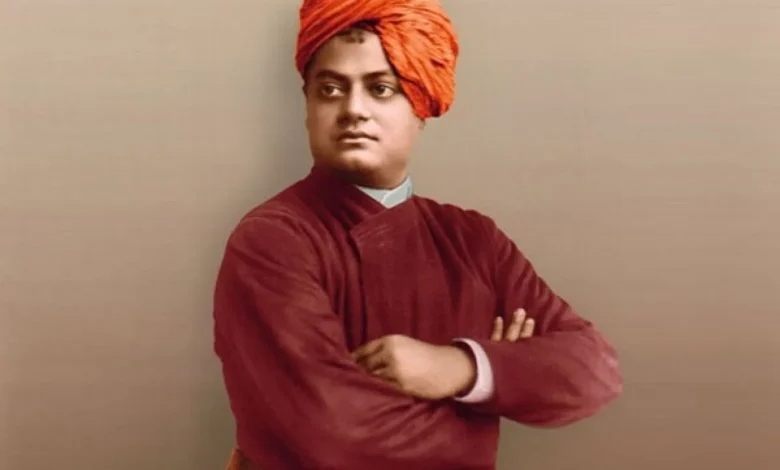
Swami Vivekananda stands as one of the most influential spiritual leaders in modern Indian history and a key figure who introduced the rich heritage of Hindu philosophy to the global stage. Born as Narendranath Datta on 12 January 1863 in Calcutta, he emerged as a charismatic monk, a profound thinker, and an inspiring teacher whose words continue to resonate across generations. Through his fearless intellect, dynamic speaking, and unwavering commitment to service, Vivekananda revitalized India’s spiritual identity at a time of national uncertainty and inspired the youth to pursue strength, knowledge, and self-realization. His famous appearance at the World’s Parliament of Religions in Chicago in 1893 marked a turning point in interfaith dialogue, where he promoted universal tolerance and the unity of all religions. More than a philosopher and monk, Vivekananda was a nation-builder whose ideas shaped modern India’s understanding of education, character, and social responsibility, leaving a legacy that continues to guide millions, especially the youth, toward a life of purpose and spiritual excellence.
Swami Vivekananda Early Life & Family Background
Swami Vivekananda was born Narendranath Datta on 12 January 1863 in Calcutta (now Kolkata), in what was then British India. He came from a respected and affluent Bengali Kayastha family. His father, Vishwanath Datta, was a successful lawyer at the Calcutta High Court and a well-educated man with broad interests in literature and culture. His mother, Bhuvaneshwari Devi, was deeply religious, devoted to spiritual life, and a strong influence on his early thinking. Narendranath was one of nine siblings in the family, growing up in a lively and intellectually stimulating household. The blend of his father’s rational, progressive outlook and his mother’s deep spiritual devotion shaped Narendra’s mind from a young age. He showed early signs of intense curiosity, often pondering life’s big questions and showing interest in meditation, religion, and the nature of existence.
Swami Vivekananda never married and had no biological children. From early adulthood, he dedicated his life to spiritual practice, teaching, and service, choosing the path of a monk rather than family life.
Swami Vivekananda Childhood Traits
From an early age, Narendranath Datta showed a rare combination of intelligence, energy, and curiosity. He was known to be active and sometimes mischievous, but he also demonstrated a sharp mind and powerful memory. While other children played without concern, Narendra often asked thoughtful questions about life, God, and the soul. He showed a deep interest in meditation and could sit quietly with intense focus long before he had formal spiritual training. Stories of wandering monks fascinated him, and he frequently imagined a life dedicated to truth, purity, and service. These early traits revealed the strong will, discipline, and spiritual hunger that later shaped him into Swami Vivekananda, a global spiritual figure.
Swami Vivekananda Education
Narendranath Datta received a strong education that shaped both his intellect and character. He began his schooling at the Metropolitan Institute in Calcutta, where he quickly stood out for his sharp memory, clear reasoning, and interest in a wide range of subjects. As he advanced in his studies, he entered Presidency College, Calcutta, one of the most respected institutions of the time. There he was introduced to Western philosophy, history, science, and logic, while still maintaining a strong connection to Indian culture and scripture at home.
During his student years, he explored both Eastern and Western knowledge, becoming familiar with the writings of European thinkers as well as the teachings found in the Vedas and Upanishads. His education was not limited to books. He was active in physical activities such as wrestling, boxing, and gymnastics, which helped him develop discipline and confidence. This combination of intellectual depth, physical strength, and cultural balance played a key role in shaping the future Swami Vivekananda, allowing him to communicate across cultures with clarity and authority.
Swami Vivekananda Spiritual Awakening & Meeting His Guru
As Narendranath grew older, his search for spiritual truth became the central focus of his life. He studied religious scriptures, questioned scholars, and explored different ideas about God and the human soul. Yet he remained unsatisfied, because he wanted a direct experience of the divine, not just theories or philosophies.
This search brought him to Sri Ramakrishna Paramahansa, a respected mystic at the Dakshineswar Kali Temple near Calcutta. Their first meetings were marked by intense discussions. Narendra questioned Ramakrishna boldly, testing him with logical challenges. Unlike others, Ramakrishna welcomed these questions with calmness and clarity. Over time, Narendra recognized Ramakrishna’s spiritual depth and came to accept him as his guru.
Under Ramakrishna’s guidance, Narendra experienced profound spiritual transformation. The teachings he received emphasized the unity of all religions, the divinity of every soul, and the importance of realizing God through service and devotion. After Ramakrishna’s passing in 1886, Narendra took monastic vows along with a group of fellow disciples and embraced a life of renunciation. It was at this point that he fully stepped onto the path that would later make him known to the world as Swami Vivekananda.
Swami Vivekananda Monastic Life and Travels
After the passing of Sri Ramakrishna in 1886, Narendranath took formal vows as a monk and embraced a life of discipline, simplicity, and spiritual practice. In 1888, he set out on a long journey across India as a wandering monk, seeking to understand the soul of the nation through direct experience. He traveled mostly on foot, visiting temples, cities, villages, mountains, and remote regions. Along the way, he met scholars, saints, kings, and ordinary people, observing India’s spiritual heritage as well as its social challenges.
During this period, he adopted different monastic names such as Vividishananda and Sachchidananda. His travels revealed both the richness of India’s ancient wisdom and the deep poverty faced by its people. These experiences shaped his conviction that religion must serve humanity, not remain limited to rituals and theories. It was during his stay in the princely state of Khetri that he received the name “Vivekananda”, suggested by Raja Ajit Singh, symbolizing wisdom and discrimination.
By the end of these travels, Vivekananda was no longer only a disciple of Ramakrishna he had become a national figure with a mission: to uplift India through spiritual strength, education, and service.
Swami Vivekananda Public Work and International Recognition
Swami Vivekananda earned worldwide recognition through his groundbreaking participation in the World’s Parliament of Religions held in Chicago in 1893. Standing before representatives of major religions, he opened his speech with the famous words, “Sisters and brothers of America,” which immediately captured the audience. His message emphasized religious tolerance, unity, and spiritual harmony, making a powerful impact on global thought. This event marked a turning point in the modern understanding of Hindu philosophy and positioned him as a respected global spiritual leader.
After the success in Chicago, Vivekananda spent several years in the United States and the United Kingdom, delivering lectures on Vedanta, Yoga, and the universal truths of Hindu philosophy. He formed study groups and established Vedanta Societies to spread his teachings in the Western world. His confident communication, logical explanations, and spiritual depth helped Western audiences appreciate India’s intellectual and religious heritage in a way they had never experienced before.
During this period, he also raised funds to support educational and social projects in India. His international work was not only aimed at sharing ideas but also at strengthening India’s future. This global mission reinforced his belief that true spirituality must uplift both the individual and society.
Founding of Spiritual Organizations by Swami Vivekananda
After returning to India in 1897, Swami Vivekananda turned his global recognition into concrete social action. He founded the Ramakrishna Mission with the aim of applying spiritual principles to everyday life. The Mission became a major center for humanitarian work, focusing on education, healthcare, disaster relief, and uplifting the poor. Its guiding vision was that service to humanity is not separate from worship, but a direct expression of spiritual realization.
Alongside the Mission, Vivekananda also organized the Ramakrishna Math, a monastic order dedicated to training monks and spreading the teachings of Sri Ramakrishna. The Math became the spiritual wing, while the Mission served as the social wing, both working together for the moral and material improvement of society.
During the same period, Vivekananda encouraged the spread of Hindu philosophy beyond India. He supported the creation of Vedanta Societies in major Western cities, starting in the United States. These societies offered lectures, study groups, and spiritual guidance, introducing Vedanta and Yoga to a global audience.
Through these institutions, Vivekananda ensured that his teachings would continue to influence future generations, combining spiritual strength with practical service to humanity.
Swami Vivekananda Teachings and Philosophy
Swami Vivekananda’s teachings were built on the ancient wisdom of Vedanta, yet communicated in a way that spoke directly to the modern world. At the core of his philosophy was the belief that all life is sacred, and that every human being has the potential for spiritual greatness.
One of his central ideas was the unity of all religions. He taught that no single religion holds a monopoly on truth, and that each path leads to the same ultimate reality. This message of universal tolerance helped bridge cultural and religious divides at a time when such unity was rare.
Vivekananda also emphasized the divinity of the individual soul. He believed that every person carries a spark of the divine within, and that self-realization is not something distant or inaccessible, but achievable through sincere effort and right understanding. He encouraged people to be strong, self-confident, and self-reliant.
Service to humanity was another pillar of his philosophy. He taught that helping others—especially the poor and oppressed—is not just an act of charity, but a sacred duty. For him, serving people in need was a direct expression of spiritual commitment.
Education, too, held a key place in his vision. Vivekananda argued that true education should build character, strengthen the mind, and awaken inner strength. He believed that education must develop both heart and intellect, preparing individuals to contribute meaningfully to society.
Through these teachings, Vivekananda inspired a generation of thinkers, leaders, and youth to approach life with courage, clarity, and compassion.
Swami Vivekananda Death
Swami Vivekananda passed away on 4 July 1902 at the Belur Math near Calcutta, the headquarters of the Ramakrishna Order. On the day of his death, he followed his usual routine of meditation, teaching, and discussions with fellow monks. Later in the evening, while alone in his room, he entered a deep meditative state and peacefully left his body. He was only 39 years old.
The medical explanation often given for his death is the rupture of a blood vessel in the brain, but his followers regard it as mahasamadhi, a conscious departure from the physical body through intense spiritual practice. His sudden passing shocked India and his admirers abroad, as he had been active and productive until his final day.
Swami Vivekananda was cremated on the banks of the Ganga River at Belur, directly across from the cremation site of his guru, Sri Ramakrishna, symbolizing the profound spiritual bond between them. His early death did not diminish his influence; instead, it added to the sense of mission and urgency that defined his life.
Swami Vivekananda Legacy
Swami Vivekananda left a legacy that transformed both India and the world. As a spiritual leader, he revived interest in Vedanta and Yoga, presenting them as living philosophies that could guide modern life. His speeches and writings challenged narrow thinking and encouraged people to embrace strength, fearlessness, and service.
Through the Ramakrishna Math and Ramakrishna Mission, he built institutions that continue to shape society through education, healthcare, disaster relief, and spiritual teaching. These organizations operate across India and abroad, touching the lives of millions.
Vivekananda also helped reshape India’s national identity during a time of colonial rule. His message urged Indians to take pride in their culture, regain confidence, and work for social upliftment. Many national leaders including Mahatma Gandhi, Subhas Chandra Bose, and Jawaharlal Nehru acknowledged his influence on India’s freedom struggle and social reform movements.
Internationally, Vivekananda is recognized as the first major ambassador of Hindu philosophy to the Western world. His appearance at the Parliament of Religions in Chicago remains a landmark moment in interfaith dialogue and cultural exchange.
Today, his books, lectures, and letters continue to guide students, leaders, and seekers of all backgrounds. His emphasis on character, discipline, compassion, and education remains highly relevant in the modern world. Although he lived only 39 years, his ideas continue to inspire countless people to live with purpose and inner strength.
Why National Youth Day Is Celebrated In honor of Swami Vivekananda
National Youth Day in India is celebrated each year on 12 January, the birthday of Swami Vivekananda. This day was officially declared by the Government of India in 1984 and has been observed annually since 1985.
The purpose of celebrating National Youth Day on Vivekananda’s birth anniversary is to honor his vision for young people. Swami Vivekananda believed that the future of any country rests in the strength, character, and spirit of its youth. He encouraged young people to be bold, disciplined, and self-confident, and to work not just for personal success but for the welfare of society. His teachings emphasized that youth should be fearless, morally grounded, and committed to serving others.
National Youth Day is marked by events across India, including seminars, lectures, competitions, cultural programs, and community service activities. Schools, colleges, and youth organizations use this day to highlight Vivekananda’s teachings and to inspire young people to develop qualities such as courage, resilience, leadership, and compassion.
By celebrating his birth anniversary as National Youth Day, India honors Swami Vivekananda’s lasting belief that “the youth of today are the leaders of tomorrow,” and encourages every young citizen to realize their full potential while contributing to the progress of the nation.
Conclusion
Swami Vivekananda remains one of the most influential figures in modern India and a global voice for spiritual unity, strength of character, and service to humanity. In just 39 years, he introduced the world to the depth of Indian philosophy, challenged barriers between cultures and religions, and inspired countless individuals to discover their inner power. His teachings continue to shape institutions, guide social movements, and influence leaders across generations. By dedicating his life to truth, education, and the upliftment of others, Vivekananda proved that spirituality is not an escape from life but a force that transforms it. Today, his legacy lives on in the Ramakrishna Mission, in Vedanta centers around the world, in the celebration of National Youth Day, and in the hearts of people who seek purpose, strength, and service. His message remains timeless: true growth begins within, and the highest duty of humanity is to help one another rise.
Frequently Asked Questions About Swami Vivekananda
1. Who was Swami Vivekananda?
Swami Vivekananda was an Indian monk, spiritual teacher, and one of the most influential leaders of modern India. He introduced Hindu philosophy, especially Vedanta and Yoga, to the Western world and inspired millions with his teachings on strength, service, and spirituality.
2. What was Swami Vivekananda’s real name?
His real name was Narendranath Datta (also spelled Narendra Nath Dutta).
3. When and where was he born?
He was born on 12 January 1863 in Calcutta (now Kolkata), India.
4. Did Swami Vivekananda marry or have children?
No. Swami Vivekananda never married and had no biological children. He lived a monastic life dedicated to spirituality and service.
5. Who was Swami Vivekananda’s guru?
His guru was Sri Ramakrishna Paramahansa, a well-known Indian mystic and saint who deeply influenced his spiritual development.
6. Why is Swami Vivekananda famous?
He became globally famous after his historic speech at the World’s Parliament of Religions in Chicago (1893), where he spoke about religious tolerance and the unity of all religions.
7. What organizations did he establish?
He founded the Ramakrishna Math and the Ramakrishna Mission, which continue to engage in spiritual, educational, and humanitarian work around the world.
8. What were his main teachings?
His teachings focused on:
- The unity of all religions
- The divinity of the soul
- Service to humanity
- Strength of character and education
- Spirituality in daily life
9. When did Swami Vivekananda die?
He passed away on 4 July 1902 at Belur Math near Calcutta at the age of 39.
10. What caused his death?
Medically, it is believed that he died from a rupture of a blood vessel in the brain. His followers regard his passing as mahasamadhi, meaning a conscious spiritual departure from the body.
11. Why is National Youth Day celebrated on his birthday?
The Government of India declared 12 January as National Youth Day to honor his ideas and inspire young people. Swami Vivekananda believed in the power of youth to build a strong and moral nation.
12. What is Swamiji’s legacy today?
His legacy lives on through:
- The Ramakrishna Mission and Math
- Vedanta centers worldwide
- His influence on education, spirituality, and youth empowerment
- His writings and teachings, which remain widely studied