Patricia de Lille Biography, Age, Career, Personal Life, Controversies, Early Life

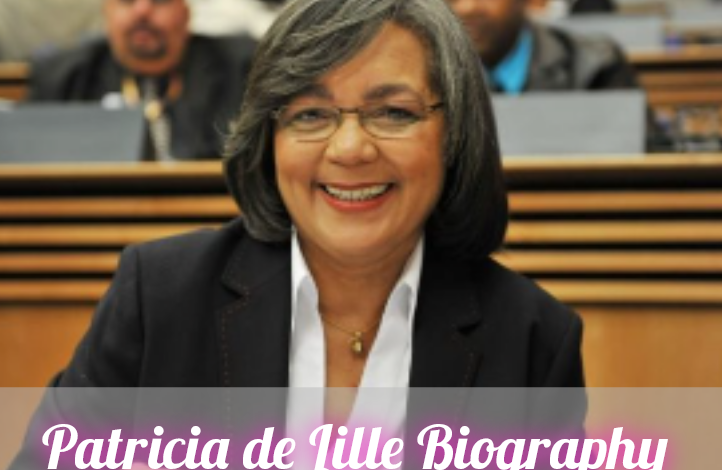
Patricia de Lille Biography
Patricia de Lille stands out as a key figure in South African politics. Her life story shows a path from fighting against unfair laws to leading in government. Born in a small town during tough times, she grew into a strong voice for change. Today, at 74 years old, she serves as the Minister of Tourism in South Africa’s government of national unity. This role came after many years of work in unions, parties, and city leadership.
Her journey began in the days of apartheid, a system that separated people by race. She started as a worker in a lab and joined groups to fight for better rights. Over time, she moved into politics, starting new parties and taking on big jobs like mayor of a major city. Along the way, she faced hard challenges, including arguments within her groups and public questions about her actions. Yet, she kept going, always pushing for fairness and good governance.
This article looks at her full story to help readers learn about her impact on South Africa. It covers her start in life, her work path, tough moments, family details, wins, and more. By reading this, people can see how one person can shape a country’s future through hard work and bravery. Her tale inspires many, especially those who want to make a difference in their communities.
Patricia de Lille Early Life and Education
Patricia de Lille came into the world on February 17, 1951, in Beaufort West, a quiet town in South Africa’s Western Cape province. Her full name at birth was Patricia Lindt. She grew up in an Afrikaans-speaking family from the coloured community, as defined under the old apartheid rules. Her parents were Henry Lindt, a teacher who supported the Pan Africanist Congress, and Gertrude Lindt. Patricia was the third child out of seven, which meant a busy home full of siblings.
Life in Beaufort West during the 1950s and 1960s was not easy for families like hers. Apartheid laws limited where people could live, work, and go to school based on their race. Despite these barriers, her family valued learning. Patricia went to Bastiaanse Hoërskool, a local high school where she finished her basic education. She did not go on to university right away. Instead, she trained to become a chemical technologist, a job that involved working with lab tools and materials.
In 1974, at age 23, she started her first job as a laboratory technician at a factory. She stayed with that company for 16 years, until 1990. This work gave her a steady income and taught her about the daily struggles of workers. During this time, she saw how unfair pay and conditions affected people, especially those from disadvantaged groups. Her early experiences shaped her views on justice and equality. They pushed her to get involved in groups that helped workers speak up.
One of her siblings, sister Sarah Paulse, also entered politics later on. This shows how the family background encouraged public service. Patricia’s humble start in a small town far from big cities like Cape Town or Johannesburg did not stop her from dreaming big. It built her strength and drive to fight for change. By understanding her roots, readers can see why she became so active in unions and politics. Her story reminds us that leaders often come from everyday places, facing real problems that motivate them to help others.
Patricia de Lille Career
Patricia de Lille’s work life spans over 50 years, from lab work to high government posts. It shows her growth from a union fighter to a national leader. Her career splits into stages: union work, anti-apartheid fights, early politics, party building, city leadership, and current ministry roles.
She began in the trade union world in the 1970s while at her factory job. She joined the South African Chemical Workers Union as a shop steward, a role where she helped fellow workers with issues like pay and safety. Her skills and passion led to quick rises. By 1983, she became a National Executive Member. Then, in 1988, she got elected as National Vice-President of the National Council of Trade Unions, or NACTU. This made her the highest-ranking woman in unions at that time. Her work focused on better conditions for workers during apartheid, when laws favored white people.
As unions linked to the fight against apartheid, Patricia joined the Pan Africanist Movement in 1989. She served on its National Executive Committee. This group worked for black rights and equality. She led talks in the lead-up to South Africa’s first free election in 1994. These negotiations helped end apartheid and start democracy.
In 1994, voters chose her as a Member of Parliament for the Pan Africanist Congress, known as PAC. She held this seat until 2003. During her time, she chaired the Parliamentary Committee on Transport from 1994 to 1999. She also joined committees on health, minerals and energy, trade and industry, communications, rules, and ethics. One big act was blowing the whistle on the South African Arms Deal in the late 1990s. This was a huge government buy of weapons worth billions. She used her MP status to point out possible corruption, leading to probes that exposed issues with deals involving companies from Europe and elsewhere.
Not happy with PAC’s direction, she left in 2003 during a rule allowing politicians to switch parties. On June 21, 2003, she started the Independent Democrats, or ID. She led this party until 2014. The ID aimed to fight corruption and help the poor. It grew fast, winning seats in elections. In August 2010, the ID joined forces with the Democratic Alliance, or DA, to strengthen opposition to the ruling African National Congress, or ANC. The full merger happened in 2014, ending ID as a separate group.
Under the DA, Patricia took new roles. From September 22, 2010, to May 31, 2011, she served as Western Cape Provincial Minister of Social Development under Premier Helen Zille. This job involved helping families, children, and vulnerable people with services like welfare and support programs. She worked to improve lives in the province.
In April 2015, she became the DA’s leader in the Western Cape, holding that until February 1, 2017. Her biggest city role came in 2011. The DA picked her as their candidate for Mayor of Cape Town, beating others like Dan Plato. She won the election on May 20, 2011, and started as mayor on June 1, 2011. Voters re-elected her in 2016 for a second term. As mayor until October 31, 2018, she focused on building infrastructure, like roads and housing, and boosting tourism. She became the first mayor in democratic South Africa to finish a full term, showing steady leadership in a busy city.
Her time as mayor had ups and downs. In May 2018, her mayorship paused for a week due to party issues, but a court fixed it. She left the DA on October 31, 2018, after disagreements.
Quick to bounce back, she founded the Good party on December 2, 2018. She became its leader and Western Cape premier candidate in February 2019. In the May 2019 election, Good won seats, and she returned to Parliament as an MP on May 22, 2019. President Cyril Ramaphosa named her Minister of Public Works and Infrastructure on May 29, 2019. She held this until March 6, 2023. In this role, she oversaw building projects, roads, and public buildings across the country.
On March 6, 2023, she switched to Minister of Tourism. Ramaphosa reappointed her on June 30, 2024, after the 2024 election where Good got one national seat. She remains the party’s only MP. In June 2024, Good joined the ANC-led government of national unity. As Tourism Minister, she works on growing visitor numbers and jobs. Recent efforts include a Tourism Growth Partnership Plan for 2025 to 2029, approved by cabinet. She signed a 2025 to 2030 action plan with Mozambique’s economy minister on December 3, 2025, to boost tourism between the countries.
In October 2025, Good merged with Rise Mzansi and Build One South Africa to form Unite for Change. This new group aims for the 2026 local elections, with Patricia on the Leader’s Council. The parties stay separate until the 2029 national vote. This move shows her ongoing push for unity in politics.
Her career teaches lessons on adapting to change. From union halls to cabinet meetings, she has influenced laws, fought wrongs, and built alliances. Readers can learn from her how persistence pays off in public service.
Patricia de Lille Controversies
Like many leaders, Patricia de Lille has faced public disputes and questions about her choices. These moments tested her but also showed her ability to defend herself. All cases ended with her cleared or moving forward.
In 2004, during ID’s early days, some members accused her of running the party without enough democracy. They claimed issues like fraud in how the group worked. These complaints came during the general election but did not lead to formal charges. The party kept going under her lead.
As mayor in 2013, a businessman named Anthony Faul said she asked for a 5 million rand bribe related to a contract for fire extinguishers. Courts looked into it, but the claims got dismissed. No proof supported the accusation, and she continued her work.
In September 2017, she decided to close Cape Town’s special unit for investigations. This went against what some council members, like Jean-Pierre Smith, wanted. People worried it hid problems. Soon after, questions arose about security upgrades to her home paid by the city. An auditor-general review in 2018 cleared her, saying no wrongdoing happened.
These issues built up in the DA. On February 15, 2018, she survived a no-confidence vote in council by just one vote. But on April 25, 2018, the DA’s group voted to remove her. The party’s federal executive ended her membership on May 8, 2018. This led to her losing the mayor job briefly. The Western Cape High Court stepped in, pausing the removal on May 15, 2018, and reinstating her on June 27, 2018. A radio interview where she spoke about party matters added to the tension.
By August 5, 2018, she and the DA agreed she would resign as mayor on October 31, 2018, and leave the party. All internal charges dropped. She called it a mutual deal to move on.
These events highlight how politics can get heated with claims and counterclaims. Patricia always said she acted right and courts or reviews backed her. No criminal convictions came from any of this. For readers, it shows the pressures of leadership and the need for clear rules in parties.
Patricia de Lille Personal Life
Patricia de Lille’s home life stayed private amid her busy public roles. She married Edwin de Lille in 1972, starting a long partnership that lasted 49 years. Edwin supported her career, helping with home tasks like cooking and bills. He stood by her during tough political times. Sadly, he passed away on February 7, 2021, after a long illness. Patricia called him her rock, showing how much he meant to her strength.
They had a son named Allistair de Lille. Some reports mention a daughter, Carmen Ruiters, but main sources confirm one son. Allistair kept a low profile, away from politics. In 2006, Carmen ran for a different party in George, making them rivals briefly, but it stayed friendly.
Her sister, Sarah Paulse, followed a similar path. Sarah joined the ID and served in the Western Cape Parliament from 2004 to 2010, then in the National Assembly from 2010 to 2014.
Patricia’s family roots in Beaufort West tied to her values. Growing up with six siblings taught sharing and support. Even as a leader, she balanced work with home, though politics often took much time. Her story shows how family can ground someone in high-stress jobs.
Patricia de Lille Achievements
Patricia de Lille has earned many honors for her work in unions, politics, and fighting wrongs. These wins mark her as a pioneer, especially for women in South Africa.
One key feat was her role in the Arms Deal probe starting in 1999. As an MP, she pushed for checks on the multi-billion rand weapons buy. This led to wider investigations, exposing flaws and holding officials accountable, like Tony Yengeni.
In 2004, a survey by Markinor named her South Africa’s second favorite politician after President Thabo Mbeki. That same year, she got the Old Mutual South African Leadership Award for Woman Leadership. She also ranked in the Top 5 Women in Government and Agencies.
Voters picked her 22nd in the Top 100 Great South Africans list, noting her anti-corruption stand. The City of Birmingham, Alabama, gave her the Freedom of the City award for her global impact.
In July 2006, she became the first woman named Honorary Colonel of the 84 Signal Unit in the South African National Defence Force. In August 2006, City Press and Rapport newspapers listed her in the top 10 women in South Africa.
As mayor, she led Cape Town through growth, improving services and tourism. Her founding of ID in 2003 and Good in 2018 showed skill in building parties from scratch. Good’s join to the government of national unity in 2024 extended her influence.
Now, as Tourism Minister, her 2025 efforts on safety and growth plans aim to boost the economy. These steps could create jobs and attract visitors. Her boards include groups against corruption, like the Global Organisation of Parliamentarians against Corruption.
Overall, her wins inspire young leaders, proving one can rise from humble starts to make real change.
Conclusion
Patricia de Lille’s life tells a tale of grit and service. From a small-town girl facing apartheid to a minister shaping tourism, she has left a mark on South Africa. Her path through unions, parties, and government shows how to adapt and fight for right. Challenges came, but she overcame them with facts and resolve.
Today, on December 18, 2025, she leads efforts to make South Africa safer for tourists during busy times like the festive season. Her recent work, like the growth plan to 2029, promises more progress. As part of Unite for Change, she looks to future elections with fresh ideas.
Readers can take away lessons on leadership: stay true, build teams, and push for justice. Her story encourages all to get involved in their communities. For more on her work, check official tourism sites or follow news on South African politics.
FAQs
Who is Patricia de Lille?
She is a South African politician, current Minister of Tourism, and leader of the Good party. Born in 1951, she has worked in unions and politics since the 1970s.
How old is Patricia de Lille?
She is 74 years old, born on February 17, 1951.
What party does Patricia de Lille belong to?
She leads the Good party, founded in 2018. In October 2025, it merged into Unite for Change for 2026 elections.
Why was Patricia de Lille removed as mayor of Cape Town?
In 2018, the DA ended her membership over misconduct claims, leading to her resignation on October 31, 2018, via agreement.
What is Patricia de Lille’s role in the South African Arms Deal?
As an MP in the 1990s, she exposed possible corruption, leading to investigations.
When did Patricia de Lille found the Good party?
She started it on December 2, 2018.
Who succeeded Patricia de Lille as Mayor of Cape Town?
Dan Plato took over after her resignation in 2018.
What controversies has Patricia de Lille been involved in?
Issues include 2004 party management claims, 2013 bribery accusations (dismissed), and 2017 home upgrade probes (cleared).
What is Patricia de Lille’s educational background?
She attended Bastiaanse Hoërskool and trained as a chemical technologist, working as a lab technician from 1974 to 1990.
Who is Patricia de Lille’s husband?
She married Edwin de Lille in 1972; he died on February 7, 2021.
What awards has Patricia de Lille received?
Honors include Top 100 Great South Africans (22nd), Freedom of Birmingham, Top 5 Women in Government (2004), and Honorary Colonel in SANDF (2006).